Total Football: A Comprehensive History of World Cup Public Diplomacy
Part III: New Beginnings: Reframing National Identity on the Global Stage (1970 - 1986)
This is the third part of a series on World Cup Public Diplomacy.
Mexico 1970: MEXICOLOR
June 21, 1970, Brazil (4) - Italy (1)
The first World Cup in North America welcomed the world and ushered in a new era of global spectacle. Teams from six continents participated, including first-time qualifiers El Salvador – whose qualification campaign coincided with tensions that escalated into a brief football war with Honduras – Israel, and Morocco, while Africa and Asia were guaranteed places. Israel and Morocco were barred from drawing into the same group to reflect FIFA’s growing involvement in managing geopolitical conflicts. It set a precedent for FIFA officials to intervene in setting teams during the group stages to preserve a sense of peace amidst a period of tensions.
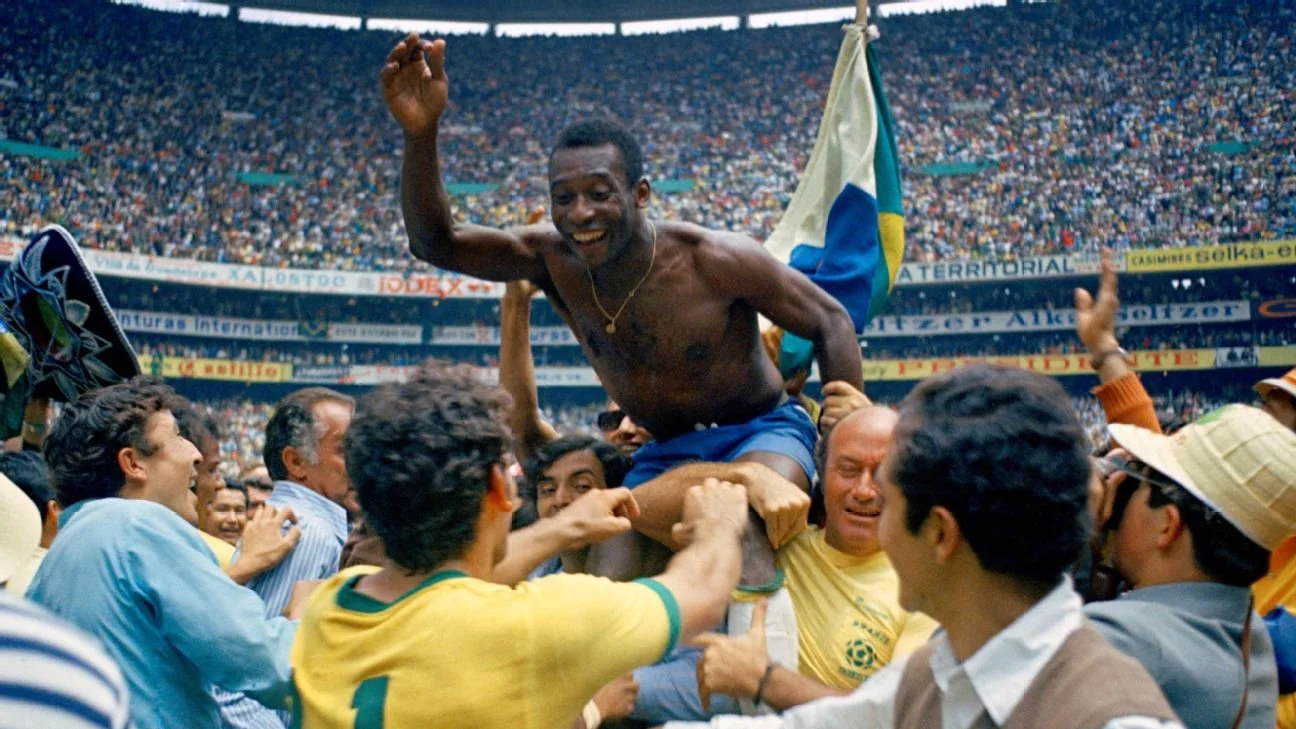
For the first time, fans experienced football matches through broadcast in color via satellite. Brazil’s side dazzled in their iconic canarinha yellow and were led by Pelé to their third World Cup victory, allowing them to forever retain the Jules Rismet Trophy. Other notable firsts included the introduction of yellow and red cards (distinct on color television), two substitutions per match, and Adidas’ iconic official match ball, the Telstar. Future World Cups would offer technological innovations and rule changes, but the tournament in Mexico redefined the World Cup as a global media event, vibrant, colorful and in real-time.
West Germany 1974: One Tournament, Two Germanys
July 7, 1974, Netherlands (1) - West Germany (2)
Cold War divisions and violence unfolded in the lead up to 1974 World Cup in the democratic West Germany. The Munich Olympics disaster of 1972, when the Palestinian militant group Black September killed 11 Israeli team members, remained on officials’ minds. A bombing at the Chilean consulate in Berlin before the finals necessitated the team to train on a football pitch enclosed by barbed wire. Looming threats from the IRA also targeted Scotland and cast shadows of doubt over the tournament.
East Germany and West Germany squared off early in the group stage of the tournament as West Germany’s newspaper Bild used inverted commas when referring to its socialist neighbor. In a stadium ringing full of chants of Deutschland, East Germany trumped West Germany in a major 1-0 upset, though West German went on to lift the cup over the Netherlands. The tournament produced a dual moment for the two sides of Germany: a symbolic victory for the East, only to be overshadowed by a broader triumph for the West on football’s biggest stage.
Although the tournament itself did not feature any incidents of violence, guard dogs, barbed wire, and newly increased security measures at most games reminded crowds of the fragmented world beyond football. The World Cup no longer just reflected global political tensions – it staged them.
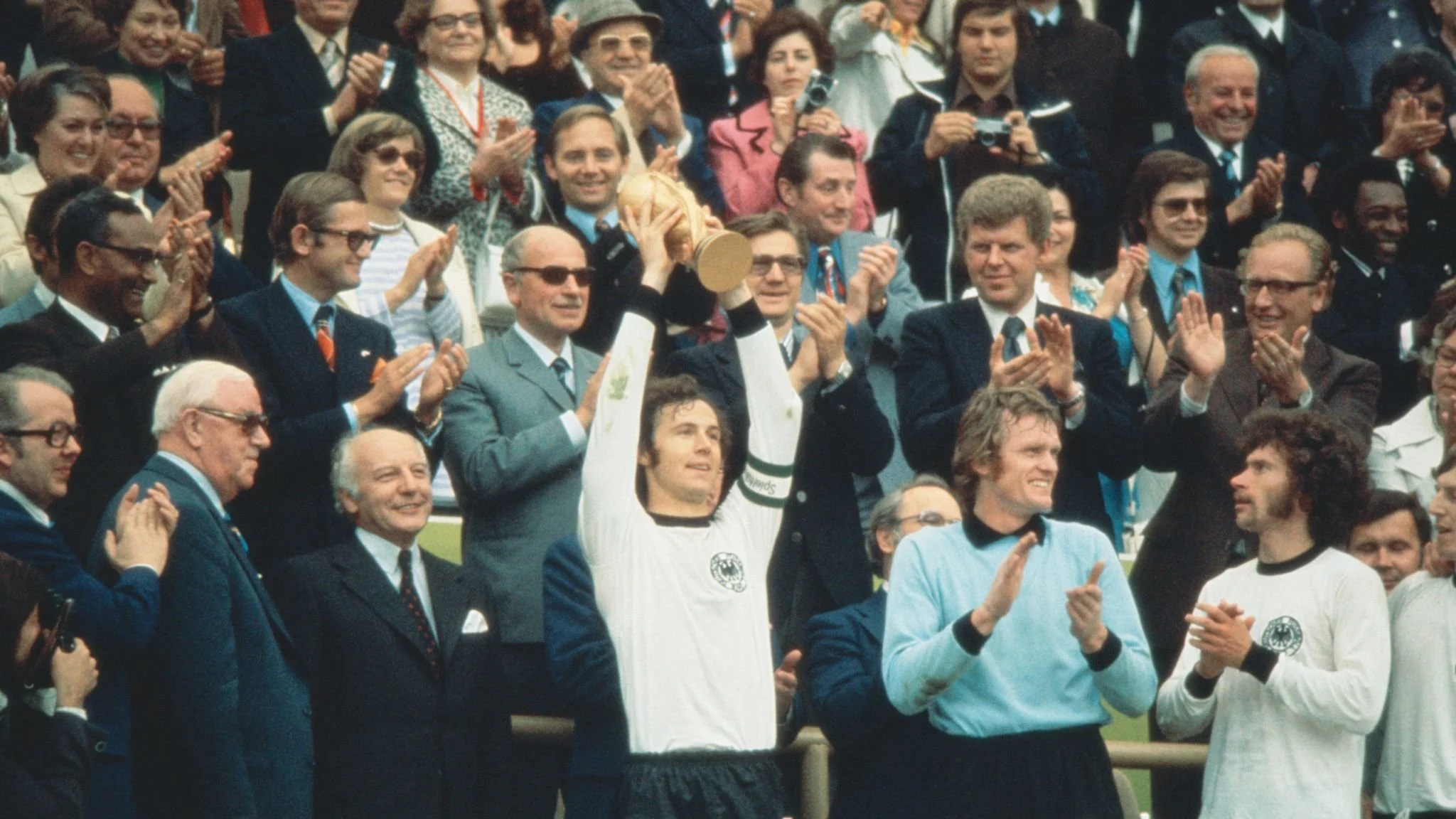
West Germany captain Franz Beckenbauer proudly lifts the trophy on home turf in the 1974 World Cup.
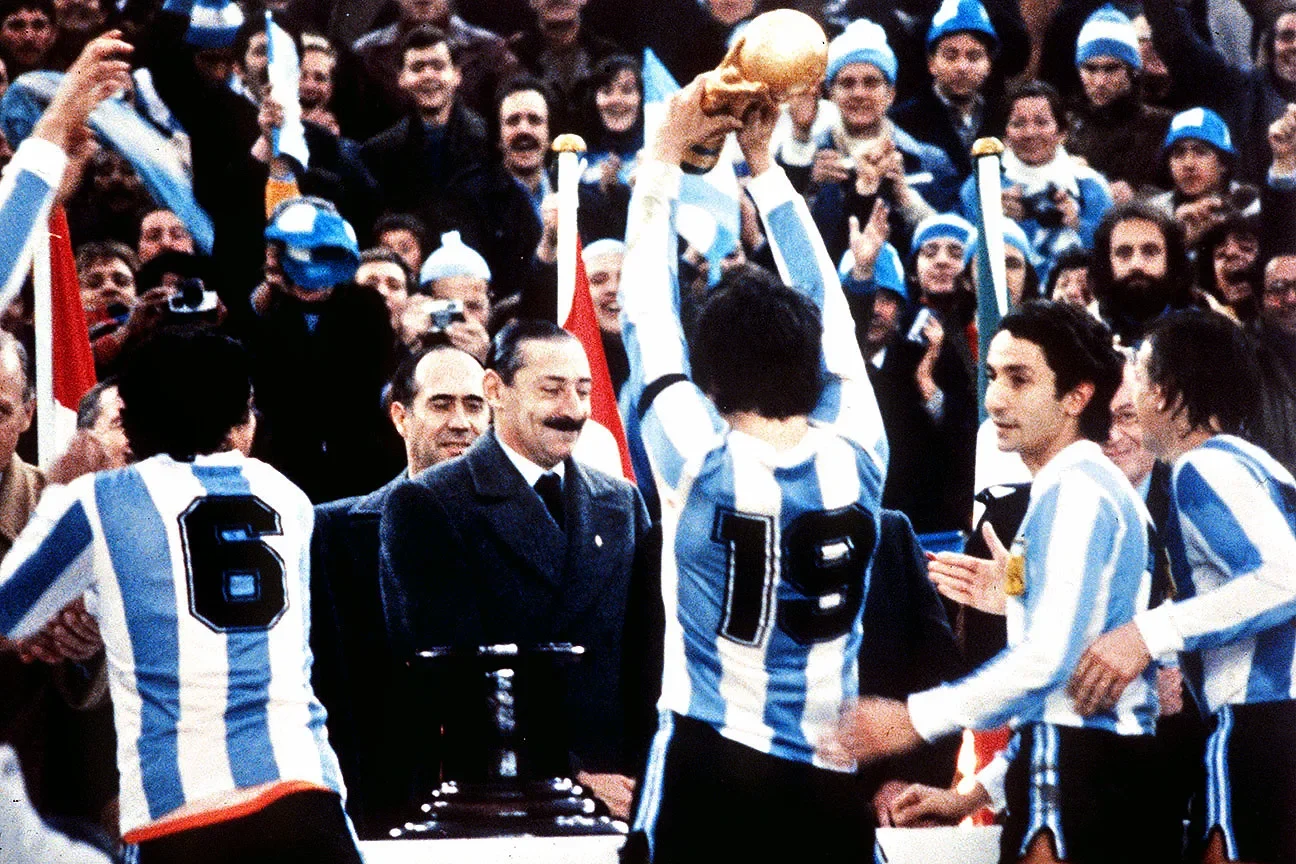
Lieutenant General Jorge Rafael Videla and his iconic mustache approve of Argentina's victory in the 1978 World Cup.
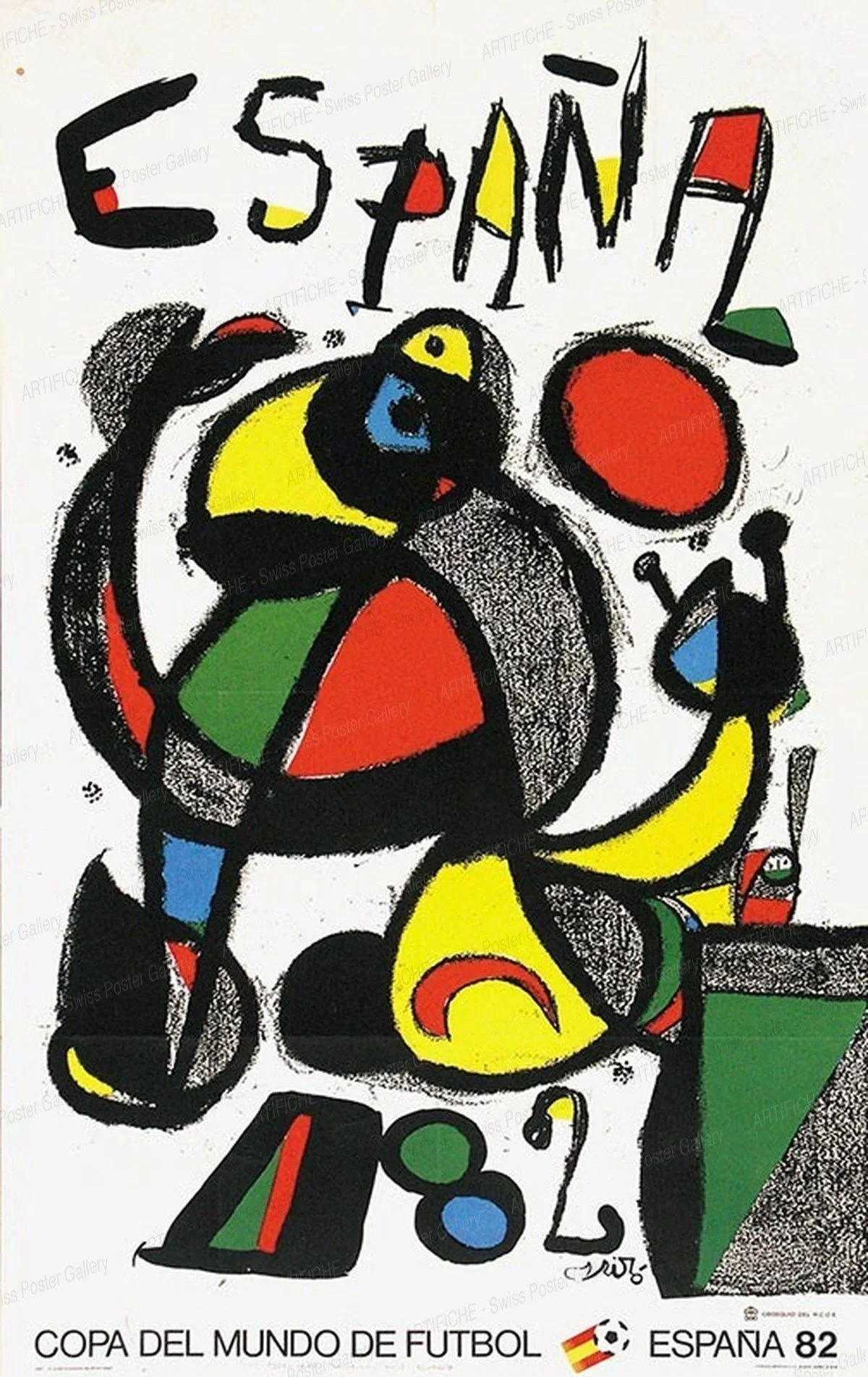
Spain draw inspiration from Pablo Picasso and modernism for their branding at the 1982 World Cup.
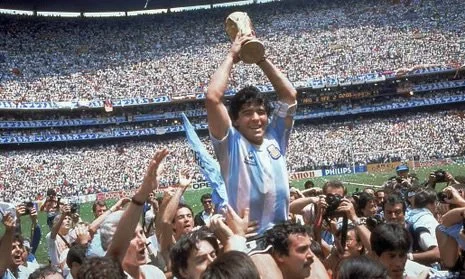
Diego Maradona uses two hands to raise the trophy, after knocking out England with his "Hand of God" goal in the quarterfinal.
Argentina 1978: Authoritarian Argentina
June 25, 1978, Argentina (3) - Netherlands (1)
The World Cup returned to an authoritarian host for the first time since the prewar era when Argentina staged the 1978 tournament. Argentina’s selection as the host came in 1966, and the logo for the competition took inspiration from President Juan Perón’s signature salute to the crowd, both arms exalted above his head. Following the military coup in 1976 which brought Lieutenant General Jorge Rafael Videla to power, attempts were made to change the logo but it had already been commercialized worldwide.
The new regime instead had to promote the World Cup as an opportunity to present Argentina as a stable, modern, and unified nation despite widespread repression. Under the junta, tens of thousands of suspected dissidents were detained, disappeared, or killed during what became known as the Dirty War. El Monumental stadium in Buenos Aires – which hosted the opening game of the competition – was situated ten minutes away from detention centers for political prisoners. Despite international criticism in the lead-up to the tournament from Amnesty International, the Swedish football association, and other groups, the games went ahead as scheduled.
On the field, Argentina defeated the Netherlands (the competition's first back-to-back runner-up) to claim its first World Cup title. Numerous allegations of corruption arose throughout the tournament, shadowed by persistent allegations of political influence and match fixing. Videla and Argentina, in the same fashion as Mussolini and Italy decades before, leveraged the World Cup as a chance to soften the image of an authoritarian nation before a global audience. While fans watched in color on television and listened on radio, political prisoners less than a kilometer from the matches suffered in silence.
Spain 1982: A Fresh Democratic Chapter
July 11, 1982, Italy (3) - West Germany (1)
In stark contrast to the previous tournament, Spain’s 1982 World Cup offered a platform for democratic renewal after decades of authoritarian rule under el caudillo Francisco Franco. Although FIFA awarded the tournament during Franco’s dictatorship in 1964, by 1982, Spain seized the opportunity to show the world that it was a modern and pluralistic society, eager to distance itself from its past.
The tournament became a vehicle for rebranding the nation. Stadiums built under Franco were renamed and modernized, infrastructure investments were highlighted, and the recent expansion of Spain’s television network played a central role in portraying the nation’s new image. The host nation, though, missed a chance to cap off this transformation with a trophy. Northern Ireland’s team left their troubles off the pitch, as a mix of Protestant and Catholic players eliminated Spain despite a turbulent period back home.
Institutionally, Spain attempted to organize as a united front, with the Royal Organizing Committee of the World Cup (RCOM) and Royal Spanish Football Federation (RFEF) working in tandem on outreach and messaging. Regional political authorities still played a major role in highlighting the country’s cultural diversity, but Spain’s central and democratic government asserted leadership over the competition and spearheaded efforts to restore its reputation in the eyes of its global counterparts. These unique governance structures, particularly in a nation with prevalent regional identity and rule, allowed for stronger integrated efforts between stakeholders carrying their own priorities. If the previous tournament was marked by the excesses of authoritarianism, Spain demonstrated how a host nation could turn a new leaf.
Mexico 1986: Betting to Win Big
June 29, 1986, Argentina (3) - West Germany (2)
Mexico became the first nation to host the World Cup twice amidst a rising debt crisis that jeopardized its host status. Instead of shying away from the high costs of the tournament, Mexican officials bet big on the potential to unlock financial revenue through partnerships between state-owned enterprises and the private sector. Televisa, Mexico’s giant private television network, served as the organizing committee, bankrolled the bulk of the expenses, and helped secure the hosting bid years earlier.
In a strikingly similar episode to Chile’s 1962 tournament, record earthquakes rattled Mexico City in 1985, killing thousands and leaving tens of thousands homeless. Mexico’s organizing committee released public statements to address international concerns while several major public protests took place on the use of state funds directed towards World Cup infrastructure projects over earthquake relief. The risky gamble would have to pay off.
As a result of the lucrative partnership with state-linked entities, FIFA reported $85 million in earnings from the competition, 9% of which went to Mexico. Foreign television networks paid $8 million to “Telemexico," a joint venture between Televisa and Mexico's powerful PRI party, for exclusive broadcasting rights. Televisa earned an additional $20 million in advertising revenues. The fortunate financial success of the tournament proved that hosting tournament could be a model for a projecting a nation’s economic resilience and ambition to the international community. And in a moment of World Cup infamy, Diego Maradona’s “Hand of God” goal against England in the quarterfinal allowed Argentina to advance and go on to defeat West Germany in the final.
Part IV: 1990–2006 (coming soon)
References
“World Cup 1970: Cards, Political Tension and Guaranteed Spots.” Al Jazeera, November 7, 2022. https://www.aljazeera.com/sports/2022/11/7/profile-fifa-world-cup-1970.
Diaz, Mauro. “World Cup of Firsts: Moments from Mexico ’70 That Shaped the Game.” ESPN. Accessed April 27, 2024. https://www.espn.com/espn/feature/story/_/id/29209012/moments-innovations-1970-world-cup-mexico-shaped-soccer-today.
“When East Germany Met West and Caused One of the Greatest World Cup Shocks.” The Independent, November 23, 2022. https://www.independent.co.uk/sport/football/world-cup/east-germany-west-germany-1974-world-cup-b2225390.html.
Pablo Llonto, "I Mondiali della vergogna. I campionati di Argentina '78 e la dittatura"("The World Cup of the Shame. Argentina '78 and the dictatorship"), Edizioni Alegre, Rome 2010, p. 38.
Moretti, John. “Another Controversial World Cup to Remember: 45 Years Later.” ReVista, June 2, 2023. https://revista.drclas.harvard.edu/another-controversial-world-cup-to-remember-45-years-later/#:~:text=By%20the%20time%20the%20World,already%20won%20the%20hosting%20rights.
Simón, Juan. “Fighting against Oblivion: The Legacy of the 1982 World Cup, or the First Challenge of Democratic Spain.” Soccer & Society 21, no. 8 (2020): 918–31. doi:10.1080/14660970.2020.1793626.
Orme, William A. “World Cup Called Financial Winner - The Washington Post.” Washington Post, June 28, 1986. https://www.washingtonpost.com/archive/politics/1986/06/29/world-cup-called-financial-winner/c5a154a9-6aa0-49c4-bc28-db0657a5485a/.
Gatterman, Lucas. “A Chance for Renewal: The 1986 World Cup Opening Ceremony.” Dartmouth University. Accessed April 27, 2024. https://course-exhibits.library.dartmouth.edu/s/modernmexico/page/gatterman.